
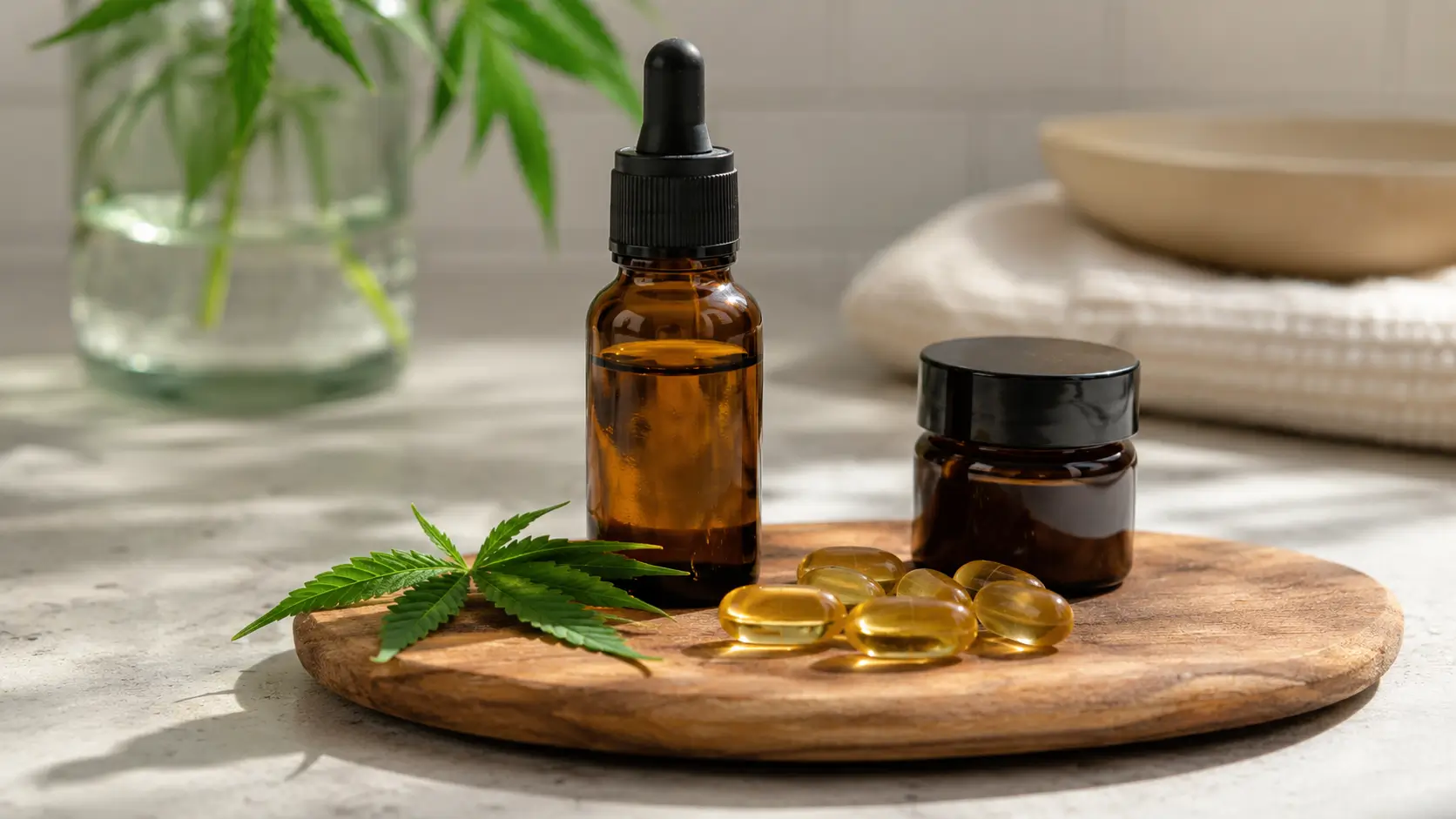
For many CBD users, taking cannabidiol is not a one-off decision. Once CBD becomes part of a wellness routine, it is natural to wonder whether regular use is appropriate and how often it should be taken.
This is particularly relevant as more people explore CBD in Australia and seek practical ways to incorporate these products into their day-to-day lives.
So, can you take CBD every day? For many people, daily use is possible. CBD is generally considered to have a good safety profile, although the amount you take, your personal response, and any medications you use can all make a difference.
Before settling into a daily routine, it helps to understand what regular CBD use actually involves.
Is It OK to Take CBD Daily?
Many people choose to use CBD daily rather than taking it occasionally.
CBD doesn’t produce the intoxicating “high” associated with THC. It interacts with the body differently, and regular users may include it in their morning, evening, or general wellness routines.
There is also no rule stating that CBD must only be used occasionally. However, daily use should still be approached carefully, particularly when trying a product for the first time.
Your response may vary depending on how much you take and how your body processes CBD. A routine that suits a friend or family member will not necessarily be the right choice for you.
Why Do Some People Take CBD Regularly?
Consistency is one of the main reasons people decide to use CBD each day.
The body gradually processes and removes cannabidiol. Research into CBD pharmacokinetics, or how the body absorbs and eliminates a substance, has found that its half-life can vary considerably. In some circumstances, CBD may have a half-life of around one to two days.
In simple terms, the amount of CBD in your body reduces over time.
Some users therefore prefer a regular schedule instead of leaving long gaps between servings. Others find that following the same routine for a period of time makes it easier to judge their personal response.
This doesn’t mean CBD needs to “build up” before it can work. It simply means that occasional and regular use can create different patterns of exposure.
What Have Studies Found About Regular CBD Use?
Scientists have studied CBD across a broad range of doses, although research into long-term everyday wellness use is still developing.
One frequently referenced 2017 review examined the available evidence on CBD’s safety and side effects. The research covered studies using very different daily amounts, from approximately 20 mg to 1,500 mg.
Overall, CBD was found to have a relatively favourable safety profile in the studies reviewed.
However, clinical research shouldn’t be treated as a personal dosage guide. A dose used under research conditions may be intended for a specific purpose and can be much higher than the amount found in a typical consumer routine.
The available evidence also highlights an important point: there is no single amount of CBD that is ideal for every user.
Finding the Right Daily Amount
CBD dosage can be one of the most confusing parts of starting a regular routine.
There is no universal number of milligrams that everyone should take each day. Your ideal amount may be influenced by:
- Body weight
- Metabolism
- Personal sensitivity to CBD
- Product strength
- Method of use
- How frequently you take CBD
- Your reason for using the product
Someone using CBD oil drops may also find it easier to make small adjustments to their serving than a person using a product with a fixed amount per piece.
If you are new to CBD, beginning with a modest amount gives you an opportunity to monitor your response before making changes.
An example of gradual adjustment could look like this:
TABLE
These figures are examples rather than personalised recommendations.
You may also find it useful to write down the amount you take each day. A simple record can help you spot patterns that are easy to miss when relying on memory.
Is Daily CBD Better Than Occasional Use?
Not necessarily.
Using CBD every day doesn’t guarantee a stronger or more noticeable result. The main advantage of consistency is that it can make your routine easier to assess.
Imagine changing your CBD amount every day, skipping several days, and switching products at the same time. If you notice a difference, identifying the reason can be difficult.
Following a more stable routine removes some of these variables.
Products such as CBD gummies can be convenient for users who prefer a consistent, pre-measured serving. Other people may favour products that allow greater control over the amount used.
Ultimately, the frequency of CBD use is a personal choice. Daily use may suit one routine, while occasional use may be more appropriate for another.
Are There Side Effects From Taking CBD Regularly?
CBD can cause unwanted effects in some people, even though it is generally considered well-tolerated.
Reported side effects can include:
- Feeling tired
- Drowsiness
- Diarrhoea
- Appetite changes
- Changes in body weight
- Dry mouth
Not everyone experiences these effects, and their severity can differ between users.
The amount of CBD consumed may be relevant. Larger doses can increase the possibility of side effects, which is another reason to avoid increasing your intake too quickly.
How a product is consumed can also affect the experience. With CBD edibles, for example, the cannabidiol passes through the digestive system before being absorbed, so the timing of effects may differ from other methods.
If CBD consistently makes you feel unwell, reducing your intake may help. You should seek medical advice if side effects are persistent or concerning.
Is There a Maximum Amount of CBD You Can Take?
Research has examined surprisingly large amounts of CBD.
Some studies have included daily doses reaching 1,500 mg. These findings are sometimes used to discuss CBD’s tolerability, but they should not be interpreted as a reason to take extremely high doses at home.
Taking more CBD may simply increase the risk of unwanted effects.
There is also no guarantee that doubling your intake will produce twice the result. Once you find an amount that suits your routine, continuing to increase it may offer no practical advantage.
For everyday use, a measured approach makes more sense than automatically reaching for a higher dose.
What About CBD and Prescription Medicines?
Medication interactions are an important consideration for anyone planning to take CBD regularly.
The liver uses a group of enzymes to process many medicines. CBD can affect the activity of some of these enzymes, potentially changing how the body handles certain drugs.
Possible interactions are particularly relevant for people taking medications such as:
- Blood thinners
- Anti-seizure medicines
- Certain antidepressants
- Some medicines used for heart conditions
This is not a complete list of possible interactions.
If you use prescription medication, speak with your doctor or pharmacist before making CBD part of your everyday routine. The same applies if you are managing an existing health condition.
Morning or Night: When Should You Use CBD?
The best time to use CBD depends on what fits naturally into your schedule.
Some users take it as part of their morning routine. Others prefer the evening, particularly if they want to use CBD at a quieter point in the day.
There is no single time that is correct for everyone.
The product’s format also matters. While ingestible products are taken by mouth, CBD creams are applied topically and may fit into a skincare or body care routine.
Rather than focusing on a perfect time of day, consider choosing a schedule you can follow consistently. This may give you a clearer idea of how you respond to the product.
How to Create a Sensible CBD Routine
A daily CBD routine doesn’t need to be complicated.
Begin by checking the product label and understanding how much CBD is provided in each serving. Product strengths can vary, so the same number of drops, capsules, or pieces will not always contain the same amount of cannabidiol.
Once you have chosen a starting amount, try to keep your routine relatively stable. Avoid making frequent large increases simply because you do not notice an immediate change.
A few practical habits may help:
- Use your CBD at a similar time each day.
- Check the amount of CBD per serving.
- Adjust your intake in small steps.
- Record your daily amount and personal response.
- Review available third-party laboratory reports.
- Pay attention to any unwanted effects.
Certificates of Analysis can provide useful information about cannabinoid content and help you compare the label with independent laboratory results.
Product quality is particularly important if you plan to use CBD regularly.
So, Can I Take CBD Every Day?
Many people can include CBD in a daily routine, and available research suggests that cannabidiol is generally well-tolerated.
The more difficult question is not whether CBD can be taken every day, but how much is appropriate for you.
There is no universal daily dose. Your body, the product you choose, and your individual routine can all influence your experience. Starting with a lower amount and making gradual adjustments gives you more time to understand your response.
Regular use also doesn’t mean you should continually increase your intake. In many cases, maintaining the lowest amount that suits your needs is the more practical approach.
If you take medication, have a medical condition, or are uncertain about using CBD every day, discuss your plans with a qualified healthcare professional before starting a regular routine.